
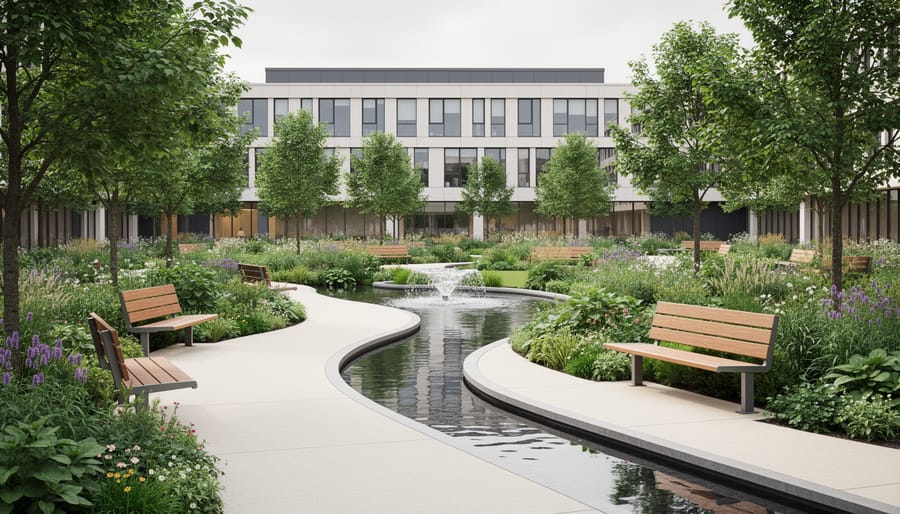
A hospital therapeutic garden transforms clinical healthcare settings into healing environments by combining thoughtful landscape design with research-backed principles that support patient recovery, reduce stress, and improve wellbeing for patients, families, and staff alike. These specialized outdoor spaces go far beyond aesthetic appeal. They’re carefully planned to be accessible, safe, and genuinely restorative for people facing physical and emotional health challenges.
The core of effective therapeutic garden design lies in understanding how different elements work together to create calm and comfort. Soft, varied plantings engage the senses without overwhelming. Comfortable seating offers places to rest and reflect. Smooth, navigable pathways welcome wheelchair users and those with limited mobility. Water features provide soothing background sound that masks clinical noise from nearby buildings.
What makes these gardens truly therapeutic is their attention to the specific needs of healthcare environments. Plant selection prioritizes non-toxic, non-allergenic species with gentle textures and calming colors. Design eliminates hazards like thorny stems or trip-prone roots. Spaces accommodate both solitude and small gatherings, recognizing that healing happens in different ways for different people.
Whether you’re a healthcare professional exploring options for your facility, a landscape designer stepping into healthcare projects for the first time, or a gardening enthusiast curious about how green spaces support wellness, the principles behind therapeutic gardens offer valuable insights. They remind us that gardens aren’t just beautiful. They’re powerful tools for human healing and connection to nature, even in the most clinical settings.
Why Hospitals Are Investing in Healing Gardens
The healthcare industry’s approach to healing has evolved dramatically. Where hospitals once viewed gardens as purely aesthetic additions or leftover space, forward-thinking institutions now recognize them as essential therapeutic tools that directly support patient recovery and staff wellbeing.
This paradigm shift stems from a growing understanding that healing encompasses more than medical intervention alone. Modern healthcare design acknowledges that physical environments profoundly influence outcomes, and nature provides something clinical settings cannot replicate: a restorative connection to the living world that humans instinctively respond to.
The recognized benefits extend across multiple dimensions of hospital life. Patients with access to nature benefits often experience reduced anxiety, improved mood, and enhanced pain management through natural distraction and stress reduction. Views of greenery and opportunities to spend time outdoors create psychological relief from the clinical environment’s inherent stresses.
Healthcare workers benefit equally. Nursing staff facing burnout find brief garden visits restore mental clarity and emotional balance during demanding shifts. The garden becomes a crucial respite space where caregivers can decompress, ultimately improving their capacity to provide compassionate patient care.
Family members navigating the emotional weight of a loved one’s illness need these spaces too. Therapeutic gardens offer neutral ground away from beeping monitors and antiseptic corridors where difficult conversations can happen naturally and children can play while visiting hospitalized parents.
Hospitals investing in these spaces recognize they’re addressing the whole person, not just treating symptoms. The evidence base continues expanding, and healthcare administrators increasingly view therapeutic gardens as strategic investments in care quality rather than optional amenities.
Core Design Principles for Hospital Therapeutic Gardens
Universal Accessibility and Pathways
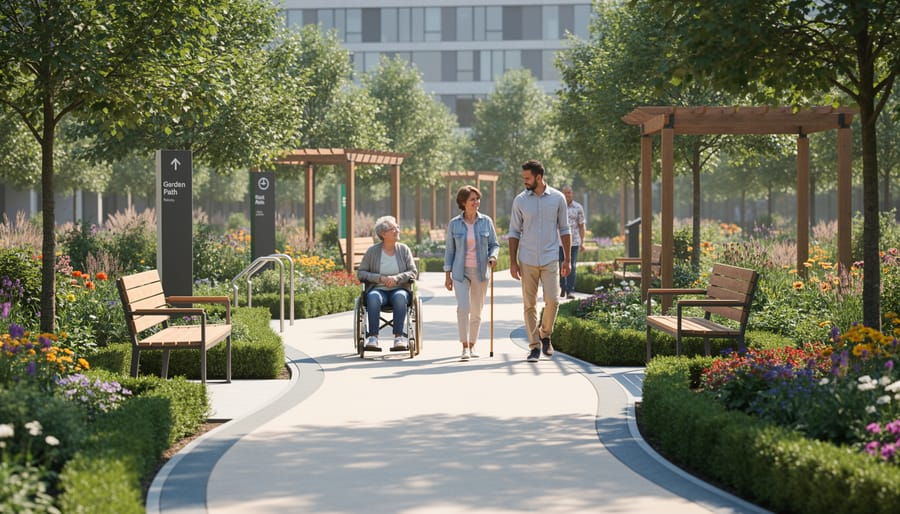
Hospital therapeutic gardens welcome everyone, but only when pathways genuinely serve patients with walkers, wheelchairs, canes, and limited mobility. A gravel trail might charm healthy visitors, but it becomes an exhausting obstacle course for someone steadying themselves after surgery.
Start with pathway surfaces that truly support recovery. Smooth, firm materials like brushed concrete, compacted decomposed granite, or porous pavement provide stable footing without creating tripping hazards. Avoid loose gravel, mulch, or uneven flagstones that catch wheels or destabilize walkers. Paths should measure at least 48 inches wide to accommodate wheelchairs and two people walking side by side, with occasional wider spots for passing or turning.
Following established accessibility measures for outdoor spaces design pathways with gentle slopes rather than steps. When elevation changes occur, ramps with gradual grades and non-slip surfaces become essential. Handrails on both sides of ramps and along longer pathway sections offer crucial support, placed at appropriate heights for both standing and seated users.
Strategic seating transforms accessibility from basic compliance to genuine comfort. Position benches every 100 feet along pathways, with backs and armrests that help patients lower and raise themselves safely. Include varied seating heights and styles to accommodate different needs, and place them where shade provides relief without blocking sightlines to gardens.
Clear sightlines and intuitive layouts prevent confusion for patients experiencing cognitive challenges or post-anesthetic disorientation. Distinct pathway colors, tactile edge markers, and memorable landmark plants create natural navigation cues that guide patients confidently through healing spaces designed for everyone.
Creating Safe, Supportive Spaces
Safety in a hospital therapeutic garden goes far beyond basic liability concerns. These spaces must protect the most vulnerable patients while still feeling natural and inviting rather than sterile.
Start with plant selection that eliminates risks. Choose varieties without thorns, toxic parts, or strong allergens. Skip roses with prickly stems, oleander with poisonous leaves, and heavily fragrant flowers that might trigger respiratory issues. Berries can be tempting to confused patients, so avoid anything that produces edible-looking fruit. For patients undergoing chemotherapy or immunosuppression, soil-borne fungi pose real concerns, which is why many hospital gardens incorporate generous hardscaping and raised planters with sterile growing media rather than open ground beds.
Surface materials demand equal attention. Patients using walkers, wheelchairs, or dealing with balance issues need pathways that won’t shift underfoot. Compacted decomposed granite or smooth concrete work better than loose gravel or wood chips. Transitions between different surfaces should be flush and clearly marked to prevent trips. In areas with morning dew or irrigation overspray, textured finishes become essential.
Lighting extends garden access while maintaining safety after dark. Motion-activated path lights guide evening walks without overwhelming patients who might be light-sensitive. Avoid creating deep shadows where obstacles disappear, and keep controls simple for patients with cognitive challenges.
Finally, consider sightlines. Staff should be able to monitor the garden from windows, and confused patients need clear boundaries they can recognize without feeling caged. Low fencing, dense evergreen hedges, or gentle grade changes define edges more gracefully than institutional barriers while preventing wandering.
Engaging All Five Senses
A multisensory garden does more than just look pretty, it creates layers of healing experiences that work together to calm anxiety, reduce stress, and spark genuine moments of joy for patients spending difficult days in medical settings.
Start with scent, one of the most powerful memory and emotion triggers. Lavender, rosemary, and jasmine release fragrance when brushed against, offering patients a gentle interaction with their environment. Position these plants along pathways where wheelchair users and walkers can reach and touch them easily. Aromatic herbs like mint and lemon balm provide both calming scents and opportunities for patients to pinch a leaf and experience something fresh and alive.
Texture matters profoundly when someone’s world has shrunk to hospital rooms and medical equipment. Incorporate lamb’s ear with its soft, velvety leaves alongside ornamental grasses that rustle and sway, creating both tactile and gentle sound experiences. Smooth river stones bordering paths contrast with rough tree bark, giving patients varied sensory input that grounds them in the present moment.
For sound, think subtle rather than jarring. A small recirculating fountain creates white noise that masks traffic and medical equipment sounds without overwhelming sensitive patients. Wind chimes placed thoughtfully add music without constant clanging. Birdhouses and feeders bring natural sounds that connect patients to the rhythms of life beyond hospital walls.
Visually, cool colors, blues, soft purples, gentle greens, create calm, while warm accent colors in small doses provide energy and lift spirits. Avoid overwhelming riot-of-color schemes that can agitate rather than soothe.
Plant Selection for Healing Environments
Selecting plants for hospital therapeutic gardens requires balancing beauty with practicality, where every choice must serve the healing mission while meeting stringent safety standards. Unlike typical landscape design where aesthetic appeal might dominate decisions, hospital gardens demand plants that are non-toxic, non-allergenic, and free from hazards like thorns, toxic berries, or invasive growth patterns that could create maintenance nightmares.
Start with plants known for their calming visual qualities and gentle fragrance, avoiding anything with overpowering scents that might trigger nausea in patients undergoing treatments. Lavender varieties, for instance, offer subtle aromatherapy benefits without overwhelming sensitivity, while ornamental grasses provide soothing movement and rustling sounds. Consider the gardening soil requirements for each plant, as hospital gardens often need amendments to support diverse plantings while maintaining proper drainage for wheelchair and walker access.
| Plant Category | Examples | Therapeutic Benefits | Key Considerations |
|---|---|---|---|
| Fragrant Herbs | Lavender, rosemary, mint (in containers) | Aromatherapy, tactile engagement, memory stimulation | Keep mint contained; avoid overwhelming scents near entryways |
| Soft Textures | Lamb’s ear, fountain grass, ferns | Touch therapy, sensory stimulation, visual softness | Non-irritating to skin; easy to maintain form |
| Year-Round Interest | Evergreen shrubs, winter-blooming heather, ornamental cabbage | Consistent visual engagement, seasonal markers | Choose varieties with minimal shedding; avoid slippery fallen berries |
| Wildlife Attractors | Coneflowers, black-eyed Susans, butterfly bush | Nature observation, gentle activity focus | Select non-aggressive spreaders; avoid plants that attract stinging insects near seating |
Seasonal interest matters tremendously because hospital patients may spend extended periods in these gardens across multiple seasons. Plan for continuous color rotation with spring bulbs, summer perennials, fall foliage displays, and winter structure from evergreens and ornamental grasses. This progression gives patients something to anticipate and provides conversation topics for families.
Low-maintenance requirements aren’t just about budget considerations, they’re about ensuring the garden consistently looks its best for patient morale. Dead-heading roses might seem like minor upkeep, but wilted blooms and messy foliage can create the opposite of a healing impression. Choose disease-resistant cultivars that maintain their form naturally, require minimal pruning, and bounce back quickly from weather extremes.
Finally, consider plants at multiple heights and layers. Ground covers, mid-height perennials, and taller shrubs create visual depth that draws the eye through the garden rather than presenting a flat, institutional appearance. Raised planters bring plants closer to patients in wheelchairs or those unable to bend, making direct interaction possible without staff assistance.
Zones and Spaces Within the Therapeutic Garden
Active Engagement Areas
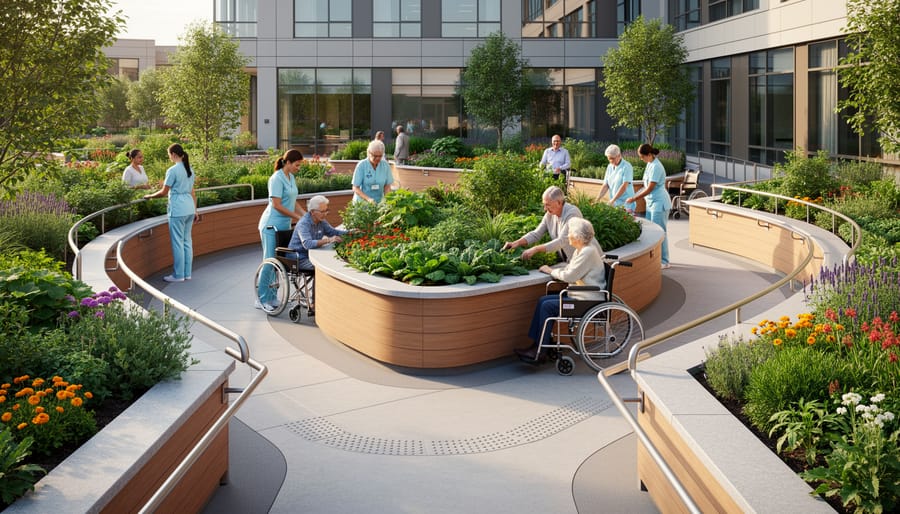
Active engagement areas transform passive observation into meaningful participation, giving patients and visitors opportunities to interact directly with the garden environment. These spaces serve as outdoor therapy rooms where movement and creativity support physical and cognitive recovery.
Raised planter beds built at accessible heights allow wheelchair users and those with limited mobility to engage in hands-on gardening without bending or kneeling. Design these beds at varying heights to accommodate different needs, incorporating wide edges that serve as seating and work surfaces. Container gardening with garden pots offers flexibility for horticultural therapy programs, enabling staff to rotate plantings and adjust difficulty levels for different patient abilities.
Physical therapy circuits integrated into garden pathways create purposeful destinations for rehabilitation exercises. Gentle slopes, varied surface textures, and strategically placed handrails encourage patients to practice walking skills in a motivating environment rather than sterile corridors.
Social gathering areas with clustered seating arrangements support group therapy sessions and family visits. Consider including outdoor tables for art activities or card games, creating normalizing social experiences that feel less clinical than indoor spaces. These zones acknowledge that healing involves not just physical recovery but also social connection and mental stimulation through purposeful activity.
Contemplative Retreat Spaces
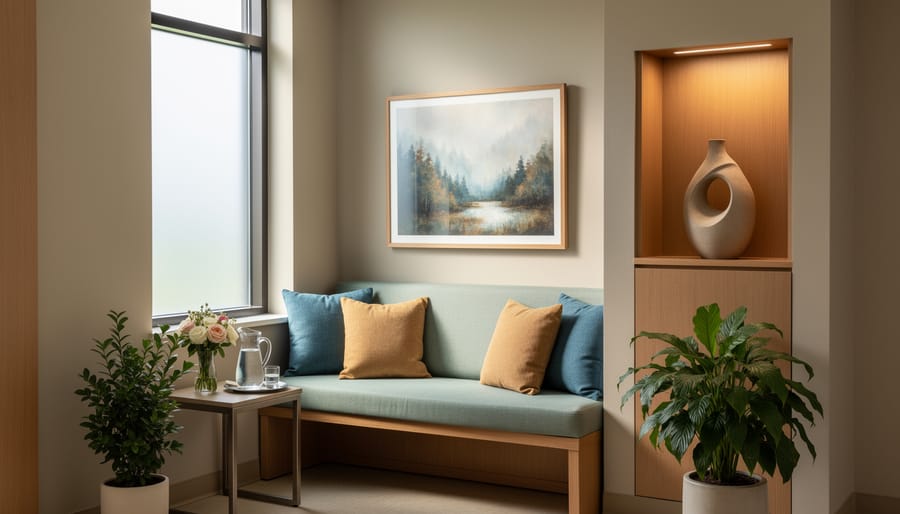
Hospital gardens serve many purposes, but contemplative retreat spaces address one of the most profound needs: the emotional and spiritual dimension of healing. These private zones give patients and families a place to step away from clinical environments, process difficult news, find moments of peace, or simply sit with their thoughts in surroundings that feel safe and nurturing.
Design these spaces around enclosure and intimacy. Tall hedges, lattice panels covered with climbing plants, or curved walls create natural boundaries that signal “this is your space” without feeling isolated or cut off from the broader garden. A semi-circular bench tucked into a flowering shrub border, a single chair positioned beneath a shade tree, or a stone circle surrounded by ornamental grasses can transform ordinary garden elements into personal sanctuaries.
Memorial gardens deserve particular attention. Families dealing with loss need somewhere to honor memory within the healing landscape. Simple elements work best: a bench with a dedication plaque, a flowering tree planted in remembrance, or a quiet water feature where visitors can reflect. Keep these spaces slightly separate from high-traffic areas while maintaining visual connection to the living garden that continues around them.
The key is creating options. Some visitors need complete solitude; others want privacy while remaining within sight of loved ones. Design multiple contemplative spots throughout your therapeutic garden, each with its own character and level of seclusion.
Family and Visitor Integration
Family time becomes precious when someone is hospitalized. A well-designed therapeutic garden creates natural gathering spots where visiting feels less like an institutional obligation and more like a genuine moment of connection.
Picnic areas with sturdy tables and comfortable seating allow families to share meals together outside the clinical environment. Position these spaces with partial shade and accessible pathways wide enough for wheelchairs and medical equipment. The simple act of eating together in a garden setting can restore a sense of normalcy during stressful hospital stays.
Children need somewhere to release energy while visiting. Incorporate interactive elements like butterfly gardens with identification plaques, textured stone pathways they can safely explore, or gentle sculptural features that invite touch and discovery. These elements give young visitors positive experiences rather than confusing memories of sterile hallways, and they provide natural conversation starters between patients and their families.
Flexible seating arrangements matter. Movable chairs let families adjust their space for privacy or group gatherings. Benches with backs and armrests accommodate visitors of different ages and abilities. Some families need quiet corners for difficult conversations, while others benefit from open areas where multiple generations can gather comfortably around a patient spending time outdoors.
Elements That Enhance the Therapeutic Experience
Water Features and Natural Sounds
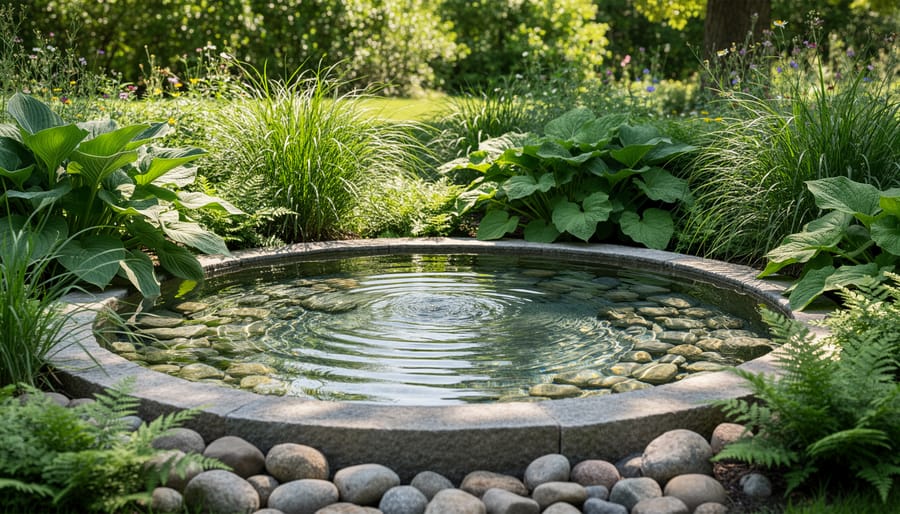
The sound of moving water has a measurable calming effect on the nervous system, making water features particularly valuable in hospital therapeutic gardens. Unlike mechanical white noise machines, natural water sounds vary in pitch and rhythm, creating an organic acoustic backdrop that can help mask disruptive hospital noises without becoming monotonous.
Simple fountains with gentle, bubbling flows work better than dramatic cascades in healing environments. The goal is soothing consistency rather than attention-grabbing drama. Recirculating systems that maintain constant water levels require minimal maintenance while providing reliable sound throughout the day.
Birdbaths serve a dual purpose: they create subtle water sounds while attracting songbirds and butterflies that give patients something alive and dynamic to observe. Position them where they’re visible from windows and seating areas but far enough from quiet zones to avoid disruption.
For spaces where standing water raises infection control concerns, dry streambeds with smooth river stones can be designed to flow during scheduled hours only, or serve as purely visual elements that suggest water’s presence. These alternatives maintain the aesthetic benefits while addressing medical safety requirements specific to immunocompromised patients.
The key is matching water feature intensity to the garden zone’s purpose, livelier sounds for active areas, whisper-quiet for contemplative spaces.
Art and Sculpture Integration
Art serves multiple therapeutic functions in hospital gardens beyond pure decoration. Sculptures and mosaics act as wayfinding markers, helping patients navigate outdoor spaces without confusing signage. A colorful mosaic bench near the entrance or a distinctive sculpture at path intersections creates memorable landmarks that reduce anxiety about getting lost.
Choose artwork that invites interaction and contemplation. Tactile sculptures with smooth curves encourage touch, while reflective spheres or wind-activated kinetic pieces hold attention and stimulate curiosity. These elements give patients something to focus on beyond their medical concerns, offering mental respite during difficult treatment periods.
Scale matters tremendously. Oversized pieces can overwhelm small spaces, while tiny sculptures disappear in expansive gardens. Position artwork at wheelchair height whenever possible, ensuring all visitors can appreciate details. Consider how pieces look from patient windows too, since many individuals observe the garden before they’re well enough to visit.
Integrate sustainable design by selecting weather-resistant materials like bronze, stainless steel, or treated stone that withstand years of exposure with minimal maintenance. Local artists often create custom pieces that reflect the community’s character, building emotional connections between patients and their surroundings. Murals and mosaics allow for collaborative creation, sometimes involving former patients or staff in the design process, which deepens the garden’s meaning as a true healing space.
Practical Considerations for Hospital Garden Implementation
Successfully implementing a hospital therapeutic garden requires careful planning beyond the initial design phase. Healthcare facilities need dedicated maintenance protocols that ensure the garden remains safe, accessible, and beautiful year-round without creating additional burden on already stretched hospital resources.
The maintenance strategy begins with selecting a qualified maintenance team that understands both horticulture and healthcare requirements. This might be in-house facilities staff with specialized training, contracted landscape professionals familiar with healthcare environments, or a hybrid approach. The team must coordinate with infection control departments to ensure pruning debris, fallen leaves, and standing water are promptly managed to prevent pathogen growth or pest issues.
Budget planning should account for ongoing costs beyond installation. Most successful hospital gardens allocate funding for seasonal plant replacements, irrigation system maintenance, hardscape repairs, and periodic safety assessments. Creating an endowment or dedicated funding stream helps protect the garden from budget cuts during financial pressures.
- Integrated Pest Management (IPM)
- A healthcare-appropriate approach to controlling garden pests using minimal chemical interventions, prioritizing physical barriers, beneficial insects, and strategic plant selection to protect immunocompromised patients.
- Safety Audit Protocol
- Regular inspection schedules to identify trip hazards, damaged surfaces, toxic plant growth, or accessibility barriers before they compromise patient safety.
- Horticultural Therapy Coordinator
- A trained professional who manages therapeutic programming in the garden, coordinates with medical staff, and ensures patients engage safely with garden activities.
- Seasonal Transition Planning
- Scheduled maintenance activities that maintain year-round visual interest and accessibility, including winter plant protection, spring cleanup, and fall preparation without disrupting patient access.
Documentation systems prove essential for long-term success. Maintaining records of plant species, chemical applications, maintenance schedules, and user feedback helps refine the garden over time. These records also demonstrate the garden’s value during budget reviews and support quality improvement initiatives.
Finally, successful gardens establish clear policies around garden access, supervised versus unsupervised use, allowable activities, and emergency procedures. Staff training ensures nurses, therapists, and volunteers understand how to safely incorporate the garden into patient care while respecting the needs of other users sharing the space.
Bringing Therapeutic Design to Your Own Garden Projects
You don’t need a hospital budget to create healing spaces in your own garden. The same principles that guide therapeutic garden design in healthcare settings translate beautifully to residential and community projects, offering stress relief and restorative benefits right outside your door.
Start with accessibility in mind, even if everyone in your household is currently mobile. Smooth pathways without abrupt transitions make gardens welcoming for visitors using walkers or wheelchairs, elderly family members, or anyone recovering from injury. Think about where you can add a bench every fifteen to twenty feet along main paths, creating natural resting spots that encourage people to linger and observe rather than rush through.
Safety considerations matter just as much in home gardens. Remove thorny plants near pathways, choose slip-resistant paving materials, and ensure adequate lighting for evening use. If you’re designing for elderly relatives or considering aging-in-place, these features become essential rather than optional extras.
Create distinct zones within your space, just as hospital gardens separate active and contemplative areas. A raised bed near the patio might serve as your engagement zone for hands-on gardening activities, while a secluded corner with a comfortable chair and fragrant plantings becomes your retreat space. You can even apply these principles to front landscaping designing layered plantings that offer visual interest from windows where someone recovering from illness might spend time.
Sensory engagement transforms ordinary gardens into therapeutic experiences. Plant lavender or roses along pathways where people will brush against them. Add a small fountain for its gentle sound. Include plants with interesting textures like lamb’s ear or ornamental grasses that invite touch.
Community gardens and senior living spaces particularly benefit from therapeutic design principles. Raised beds eliminate bending, wide pathways accommodate wheelchairs and walkers, and clearly marked garden rooms help people with cognitive challenges navigate confidently.
The goal isn’t clinical perfection but creating spaces where people naturally feel calmer, more connected to nature, and supported in their wellbeing. Every garden can offer healing if you design with intention and empathy for how people actually experience the space.
Hospital therapeutic gardens represent far more than attractive landscaping. They embody a profound understanding that healing extends beyond medical intervention to encompass our fundamental human connection with nature. Throughout this guide, we’ve explored how thoughtful design, from universal accessibility and sensory engagement to careful plant selection and functional zones, creates outdoor spaces that genuinely support recovery and wellbeing.
The principles we’ve covered aren’t reserved exclusively for healthcare settings. You can adapt these healing-centered concepts to residential gardens, community spaces, or any outdoor environment where people seek comfort and renewal. Consider how fragrant herbs, textured foliage, accessible pathways, and quiet retreat areas might transform your own garden into a restorative sanctuary.
Whether you’re a professional designer working on a hospital project or a home gardener creating a backyard refuge, the goal remains the same: crafting spaces where people feel safe, engaged, and connected to the natural world. These gardens remind us that beauty and function unite powerfully when designed with intention and care.
We’d love to hear about your experiences with therapeutic garden design. What healing elements have you incorporated into your own outdoor spaces? Share your stories and questions with the GardenSculpt community, and let’s continue exploring how gardens can nurture both body and spirit.