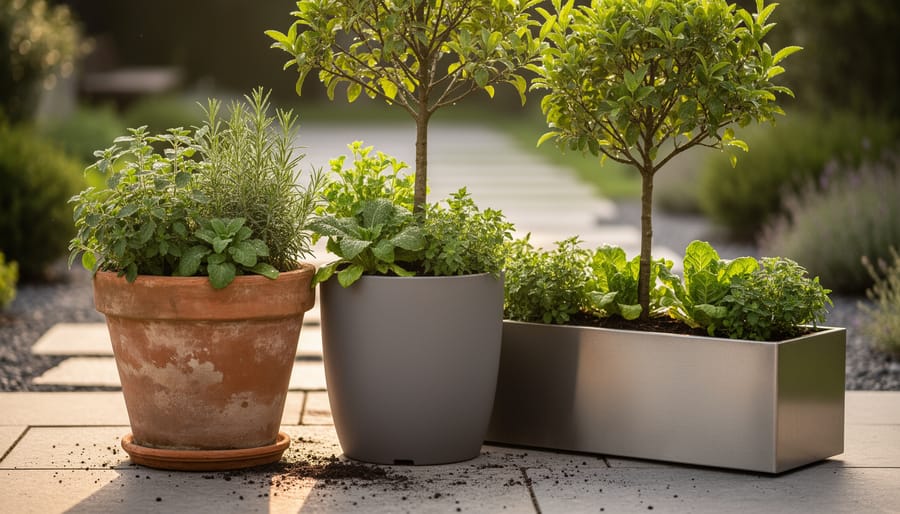
Gardening pots have evolved far beyond simple terracotta containers. Today’s garden containers serve as sculptural elements that define outdoor spaces while providing the ideal growing environment for everything from compact herbs to statement trees. The right pot balances three critical factors: material performance for your climate, drainage architecture for plant health, and visual impact that complements your garden’s design story.
The surge in container gardening throughout 2025 and into 2026 reflects a fundamental shift in how we approach outdoor spaces. Urban gardeners with limited ground space, renters seeking portable gardens, and design-conscious homeowners treating containers as outdoor art have driven innovation across materials and manufacturing. Biodegradable options now rival traditional clay in longevity, while architectural metals and composites offer weatherproof beauty that terracotta never could.
Choosing the perfect gardening pot means understanding how different materials respond to sun, frost, and water over time. Ceramic and stone offer thermal mass that protects roots from temperature swings but crack in freeze-thaw cycles without proper glazing. Lightweight fiber composites survive harsh weather while mimicking natural textures, though they vary wildly in UV stability and price. Metal containers bring modern elegance but require insulation layers in extreme climates.
This guide walks through material properties, drainage systems, size calculations for root development, and design principles that transform functional containers into garden features. Whether you’re outfitting a balcony herb garden or anchoring a courtyard with statement planters, understanding these fundamentals ensures your containers enhance both plant health and visual impact for years to come.
The Sustainability Advantage of Container Gardening
Container gardening offers surprising sustainability advantages that many gardeners overlook. When you start your first pots you’re actually making an environmentally conscious choice that extends far beyond aesthetics.
Water conservation stands out as container gardening’s most immediate benefit. Pots concentrate moisture around root zones, reducing evaporation and runoff that plague traditional beds. You control exactly how much water reaches each plant, typically using 30-50% less than in-ground equivalents. Drainage holes and saucer systems let you capture excess water for reuse rather than losing it to the surrounding soil.
Soil health protection matters more than most realize. In-ground planting disturbs existing ecosystems, compacts native soil, and requires amendments that often travel hundreds of miles. Containers keep your growing medium isolated, preventing contamination of local soil with fertilizers or treatments. When seasons change, you simply refresh the potting mix rather than rehabilitating an entire bed.
Pest management becomes gentler in containers. Elevating plants off the ground creates a natural barrier against many crawling insects and soil-borne diseases. This physical separation means fewer chemical interventions, and when treatment becomes necessary, you target individual pots instead of broadcasting pesticides across yards.
The adaptability factor can’t be overstated. Climate shifts, unexpected frosts, or intense heat waves? Move your containers to protected spots. Soil contamination discovered in your yard? Your potted plants remain unaffected. Urban gardeners dealing with poor native soil or hardscaping find containers eliminate the need to excavate and import clean earth.
Containers also reduce food miles for homegrown produce. Balconies, rooftops, and patios transform into productive growing spaces without the resource intensity of raised bed construction or soil replacement. You’re creating abundance exactly where you need it, using materials that increasingly come from recycled or renewable sources.
Materials Matter: Choosing Eco-Friendly Gardening Pots
Rotational Molded Polyethylene: The Commercial-Grade Solution
Rotational molding transforms polyethylene granules into sleek, commercial-grade gardening pots that combine sustainability with architectural presence. The process heats plastic powder inside a mold while rotating it on two axes, creating seamless, hollow containers with uniform wall thickness and exceptional strength. This manufacturing technique produces pots that withstand freeze-thaw cycles, resist cracking, and maintain their sculptural form in demanding commercial environments.
The RISE collection for LOOPE Poland exemplifies this technology’s design potential in 2026. These rotational molded polyethylene planters bring clean lines and contemporary forms to hotel lobbies, office terraces, and public landscapes where durability matters as much as aesthetics. The material’s inherent recyclability addresses commercial projects’ sustainability requirements, at end-of-life, polyethylene pots can be ground down and remolded into new products rather than contributing to landfill waste.
For landscape architects and property managers, rotational molded containers solve practical challenges that natural materials can’t address. They’re lightweight enough for rooftop installations yet stable in high winds. UV stabilizers prevent fading, maintaining design integrity for years without the patina changes of terracotta or the weathering of concrete. Custom colors integrate with brand palettes, while large-format options create dramatic focal points that smaller artisan pots can’t achieve.
The manufacturing process also supports local production with relatively modest tooling costs, reducing transportation emissions compared to imported ceramic or stone alternatives.
Natural and Biodegradable Options
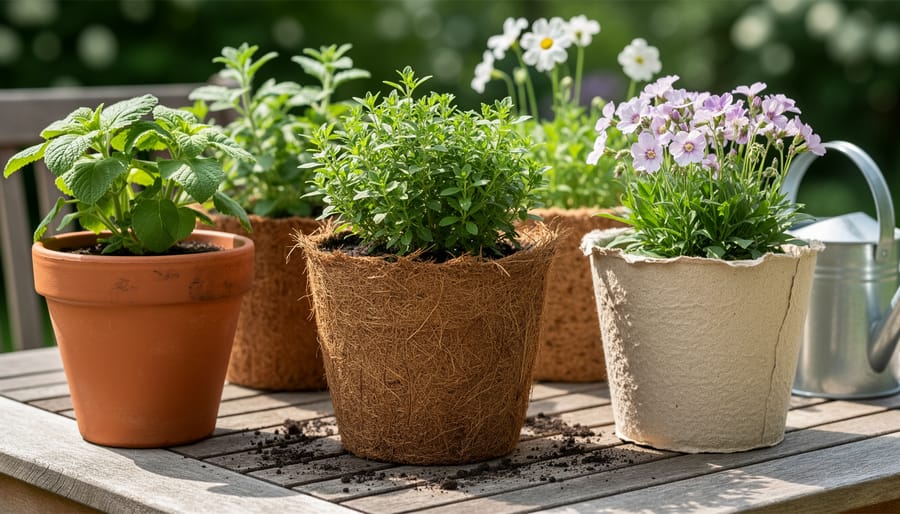
Natural materials offer gardeners the chance to choose containers that return to the earth rather than lingering in landfills for centuries. Terracotta, the traditional clay pot, remains one of the most sustainable options available: fired from natural earth, it breathes beautifully to regulate root temperature and moisture, and broken pieces can be crushed into drainage material or composted back into soil amendments. Its warm, earthy tones complement nearly any garden palette while developing an attractive patina over time.
Coconut coir pots provide another earth-friendly alternative, particularly for starting seedlings or temporary plantings. Made from coconut husk fiber, these containers biodegrade completely within a season or two, allowing you to plant them directly into the ground without disturbing roots. Bamboo fiber containers offer similar biodegradability with added structural strength, making them suitable for larger plants during a single growing season.
For those seeking longevity without environmental cost, consider wood containers crafted from sustainably harvested timber or reclaimed materials. Cedar and redwood resist rot naturally without chemical treatment, aging gracefully as sculptural elements that soften over years rather than cracking like plastic. These natural options let your container choices align with both your aesthetic vision and your commitment to gardening that works with nature rather than against it.
Fiberglass Planters for Long-Term Installations
Fiberglass stands out as a premium choice for permanent installations where sculptural impact and longevity matter most. Custom manufacturers in Vancouver, BC produce commercial-grade fiberglass planters specifically engineered for demanding environments like hotels, offices, restaurants, rooftops, and landscape projects. Unlike mass-produced containers, these planters can be fabricated in virtually any size, shape, or finish, from massive statement pieces that anchor a hotel entrance to sleek modular systems for rooftop gardens.
The sustainability case for fiberglass centers on its exceptional durability. A well-made fiberglass planter can last 20-30 years outdoors without cracking, fading, or deteriorating, meaning you’re not replacing containers every few seasons. They’re also remarkably lightweight despite their size, reducing structural load on rooftops and simplifying installation logistics. Many custom fabricators now offer gel coats with high recycled content and work with clients to design planters that can be repaired rather than discarded.
For designers, fiberglass offers unmatched creative freedom. You can specify exact dimensions to fit awkward spaces, incorporate built-in irrigation systems, or achieve complex curves and textures that reference natural stone or concrete at a fraction of the weight. This makes fiberglass ideal when your garden vision requires containers that function as architectural elements, dividing outdoor dining areas, creating green walls, or serving as sculptural focal points that define the entire landscape composition.
Architectural Pots as Sculptural Garden Elements
A well-chosen container does more than hold soil. It defines space, draws the eye, and turns a garden into a curated composition.
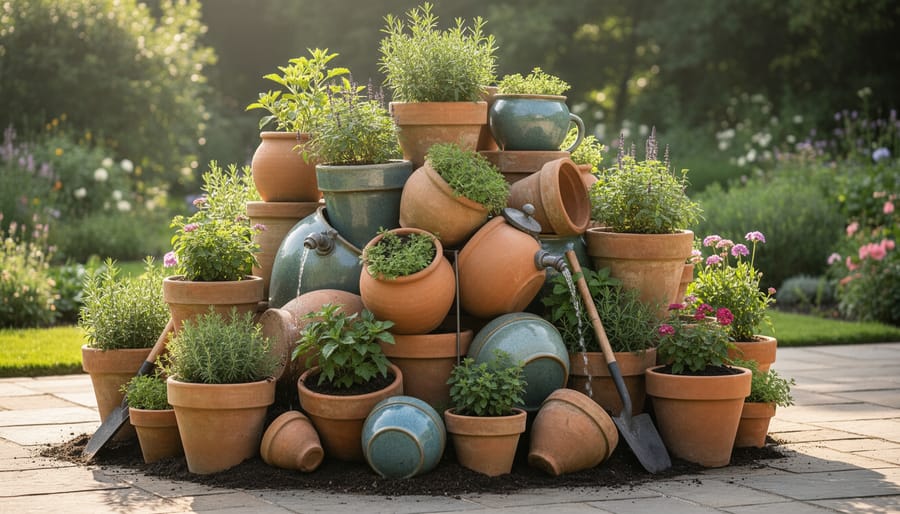
Think of large pots as architectural features that anchor your design. A single oversized vessel can anchor a corner, marking a transition between outdoor rooms. Clusters of varying heights create rhythm and movement, guiding visitors through the space. When selecting scale, consider proportion: a massive pot on a tiny patio overwhelms, while small containers scattered across a large terrace disappear. Match the container’s visual weight to its surroundings.
Form determines function and feeling. Cylindrical planters create sleek vertical lines that work beautifully in contemporary settings, while rounded urns soften angular architecture. Rectangular troughs divide spaces without walls, perfect for screening views or separating dining from lounging areas. Tapered designs feel lighter despite their size, ideal when you want presence without visual heaviness. The RISE collection for LOOPE Poland demonstrates this balance, with rotational molded polyethylene forms that combine commercial durability with sculptural appeal for hotels and landscape projects in 2026.
Color choices shape mood dramatically. Matte black containers recede, letting plants star while providing graphic punch. Pale terracotta and warm grays complement both foliage and blooms without competing. Bold hues like deep cobalt or rust-red become focal points themselves, especially striking when paired with contrasting plantings. In small spaces, repeating one container color throughout creates visual unity, particularly useful for balcony garden ideas where cohesion matters.
Placement strategy separates amateur arrangements from designed landscapes. Position statement pots at sight lines: the first view from a doorway, the end of a pathway, framing a seating area. Asymmetrical groupings of three or five feel natural, while pairs flanking an entrance bring formality. Elevate containers on plinths or platforms to vary eye level and add architectural layering.
Custom manufactured options, like the commercial-grade fiberglass planters produced in Vancouver, BC for rooftops and restaurants, offer design flexibility for permanent installations where weather resistance and specific dimensions matter. These aren’t afterthoughts tucked into leftover spaces. They’re structural elements that shape how people move through and experience your garden.
Sustainable Pot Practices Beyond Material Selection
Selecting sustainable materials is just the beginning. How you use gardening pots determines their true environmental impact and whether they become long-term garden assets or short-lived experiments.
Start with drainage fundamentals, which directly affect water conservation and plant health. Every pot needs holes, but the real strategy lies in creating layered drainage systems. Place broken pottery shards or recycled gravel at the base before adding soil to prevent waterlogging while retaining moisture where roots can access it. This simple technique reduces overwatering, one of the biggest resource wastes in container gardening.
Pots extend growing seasons in ways traditional beds cannot match. Move frost-sensitive herbs like basil indoors during unexpected cold snaps, or shift sun-loving tomatoes to follow light patterns as seasons change. This mobility means fewer plant losses and less replanting, conserving the resources invested in seeds, starts, and soil amendments. In 2026, many gardeners are clustering containers near south-facing walls to capture winter warmth, then repositioning them for summer shade.
Companion planting in containers requires rethinking traditional spacing. Pair shallow-rooted lettuce with deep-rooted carrots in a single large pot, or combine nitrogen-fixing beans with heavy-feeding cucumbers. These combinations reduce fertilizer needs while maximizing yield per square inch. The key is matching root depth and water requirements so plants coexist without competition.
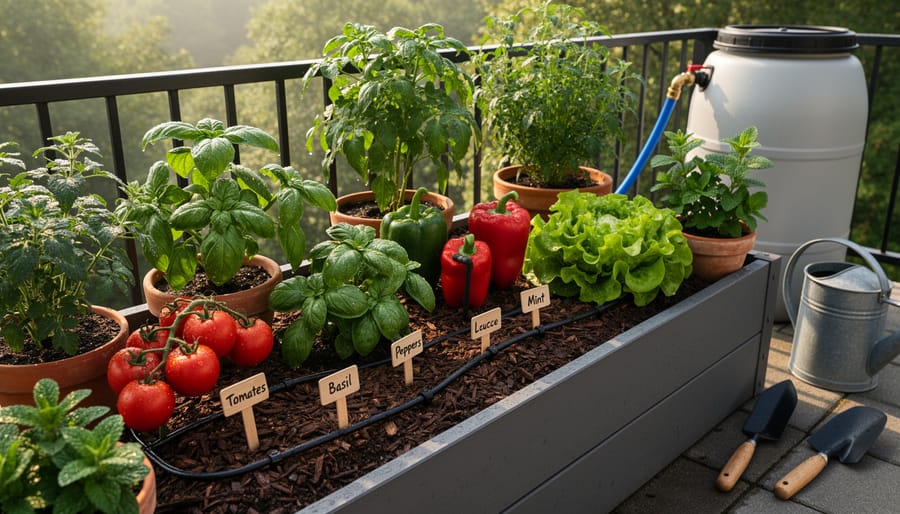
Water collection systems transform pots from resource consumers to conservation tools. Elevate containers on platforms with catchment trays underneath to collect runoff for reuse. During rain, strategically placed pots gather water that would otherwise sheet off hardscaping. Implement these watering tips to create a complete system:
- Group containers by water needs to avoid over-irrigating drought-tolerant plants while under-watering thirsty ones.
- Install drip irrigation on timers to deliver precise amounts directly to root zones, eliminating runoff and evaporation.
- Top-dress with mulch or gravel to reduce surface evaporation by up to 70 percent.
- Connect overflow from elevated pots to feed lower containers, creating a gravity-fed cascade that uses every drop.
Crop rotation maintains container soil health without constant replacement. After harvesting heavy feeders like tomatoes, plant legumes to restore nitrogen, then follow with root vegetables that break up compacted soil. This cycle means refreshing rather than replacing potting mix. Understanding soil 101 and composting basics helps you amend existing soil between seasons instead of discarding it.
Even the sculptural pots featured in commercial installations benefit from these practices. Those architectural containers become genuinely sustainable when paired with closed-loop water systems and regenerative planting strategies that reduce replacement frequency.
Where to Find Innovative Gardening Pots in 2026
Finding the right gardening pots in 2026 means looking beyond big-box retailers to discover pieces that combine sustainability with sculptural presence. The market has expanded dramatically to meet growing demand for design-forward, eco-conscious containers.
Start locally. Independent ceramicists and metalworkers often create one-of-a-kind pots that serve as genuine garden sculpture. Visit farmers’ markets, craft fairs, and local galleries to connect directly with makers who can customize pieces for your space. These artisans frequently work with reclaimed or sustainable materials, and you’ll know exactly where your pot came from.
For larger installations or commercial projects, specialized manufacturers offer architectural-grade solutions. Companies producing rotational molded polyethylene planters like the RISE collection for LOOPE Poland deliver durability and recyclability at scale. Custom manufacturers in locations such as Vancouver, BC create commercial-grade fiberglass planters designed specifically for hotels, offices, restaurants, rooftops, and landscapes where long-term performance matters.
Trade events provide valuable opportunities to see new products firsthand. The Free Design Trends Expo on February 10 showcases emerging container designs and sustainable materials, letting you evaluate quality and proportions before purchasing.
Online marketplaces now feature dedicated sustainability filters, making it easier to identify eco-certified options. Look for detailed material breakdowns and manufacturing transparency rather than vague “green” claims.
Don’t overlook reclamation yards and salvage shops. Vintage concrete urns, industrial metal containers, and repurposed vessels often surpass new products in character and environmental impact. With creative drainage modifications, unconventional finds become distinctive garden focal points.
Consider joining local gardening groups or online communities focused on container design. Members frequently share supplier recommendations, custom maker contacts, and upcoming sales that never appear in mainstream advertising.
Choosing the right gardening pots transforms your outdoor space into something far more meaningful than a collection of plants. Each container you select is a decision that ripples outward, affecting water consumption, soil health, your garden’s visual coherence, and even the broader conversation about sustainable design. The pots themselves become part of your garden’s story, defining its character as much as the blooms and foliage they hold.
Whether you gravitate toward the clean architectural lines of rotational molded polyethylene, the earthy warmth of terracotta, or the enduring strength of commercial-grade fiberglass, your choices speak to both your environmental values and your creative vision. There’s no single perfect solution. Instead, think of your container selection as an ongoing dialogue between form and function, sustainability and beauty, permanence and adaptability.
Your garden is uniquely yours, and we’d love to hear how you’re approaching container design. Have you discovered a local artisan crafting innovative pots from recycled materials? Are you experimenting with companion planting in architectural containers, or designing a rooftop installation that combines sculptural elements with edible crops? Share your projects, your challenges, and your breakthroughs in the GardenSculpt forum. The most inspiring gardens emerge when we learn from each other, trading ideas and celebrating the creative possibilities that sustainable gardening pots make possible.