
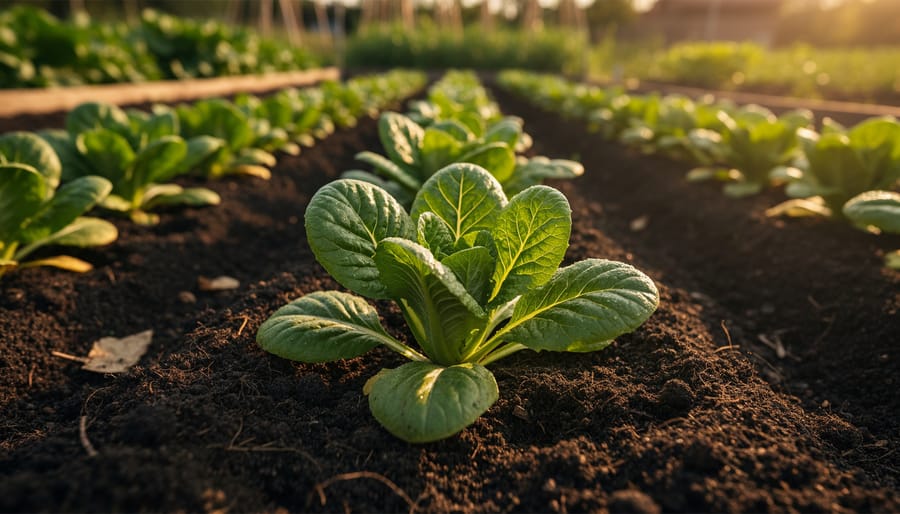
Plant fertilization is the process of providing essential nutrients to plants that may not be available in sufficient quantities in the soil. Think of it as a supplement for your garden, delivering nitrogen, phosphorus, potassium, and other vital elements that fuel growth, flowering, and fruit production.
Without proper fertilization, even the most carefully watered and sun-drenched plants can struggle. Soil naturally contains nutrients, but over time these reserves deplete as plants consume them. Container plants face this challenge even faster since they’re working with limited soil volume. The result? Stunted growth, pale leaves, disappointing blooms, and lackluster harvests.
Understanding fertilization transforms your gardening from guesswork into informed care. You’ll learn why your tomatoes need different nutrition than your roses, when to feed during the growing season versus when to hold back, and how organic options compare to synthetic formulas. This knowledge helps you read what your plants are telling you through their leaves and growth patterns, then respond with exactly what they need.
In this guide, we’ll break down how plant fertilization actually works at the root level, explore the main types you’ll encounter, and walk through practical methods for applying fertilizers in your own garden. Whether you’re growing vegetables, nurturing perennials, or designing ornamental beds, mastering fertilization gives your plants the foundation for vibrant, healthy growth.
What Plant Fertilization Means for Your Garden
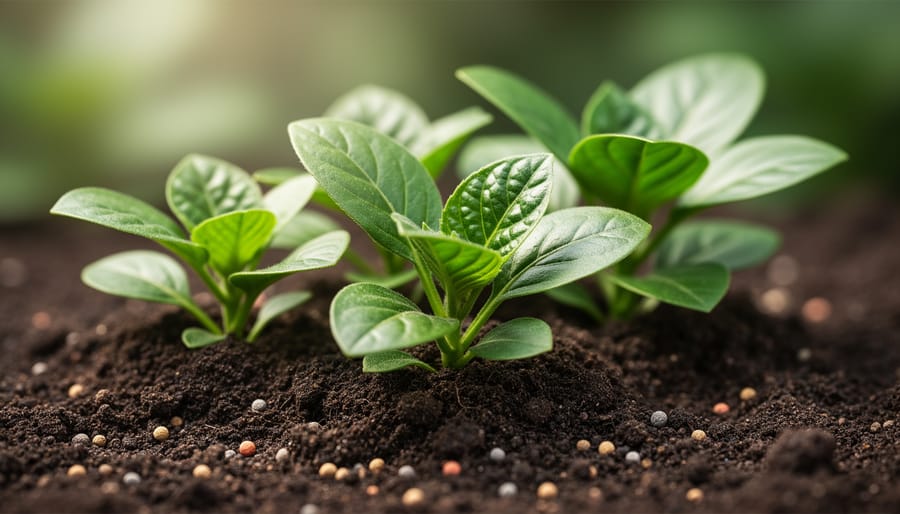
Think of fertilization as preparing a meal for your plants. While water hydrates them, fertilizer provides the vitamins, minerals, and energy they need to grow strong stems, produce vibrant blooms, and develop robust root systems. Soil might look rich and dark, but it doesn’t automatically contain everything your plants require in the right amounts. Over time, as plants grow and you harvest vegetables or enjoy season after season of flowers, the soil becomes depleted of key nutrients. That’s where fertilization steps in.
- Macronutrients (N-P-K)
- The three primary nutrients plants need in large quantities, nitrogen for leafy growth, phosphorus for roots and flowers, and potassium for overall plant health and disease resistance.
- Micronutrients
- Essential elements like iron, manganese, and zinc that plants need in smaller amounts but are still crucial for healthy development and preventing deficiency symptoms.
- Soil Fertility
- The soil’s capacity to supply plants with the nutrients they need in balanced, available forms. Fertile soil supports vigorous plant growth without constant supplementation.
- Nutrient Uptake
- The process by which plant roots absorb dissolved nutrients from the soil solution and transport them throughout the plant to fuel growth and development.
In your vegetable patch, proper fertilization means the difference between spindly tomato plants with pale leaves and sturdy vines heavy with fruit. For ornamental beds, it transforms modest flowering shrubs into showstoppers with masses of blooms that anchor your garden design. Even established perennials benefit from periodic feeding, especially if they’re growing in containers or competing with neighboring plants for resources. Fertilization isn’t just about making plants bigger, it’s about helping them reach their full potential, express their natural beauty, and contribute to the artistic vision you’re cultivating in your outdoor space.
How Plant Fertilization Works
The Role of N-P-K in Plant Health
Every bag of fertilizer shows three numbers, something like 10-10-10 or 20-5-10, and those aren’t random. They represent nitrogen (N), phosphorus (P), and potassium (K), the three nutrients plants need most. Think of them as food groups for your garden.
Nitrogen fuels leafy green growth. It’s what makes your lettuce lush and your hostas full. Too little nitrogen, and leaves turn pale yellow and growth slows. Too much, and you’ll get excessive foliage with few flowers or fruits, all show, no substance.
Phosphorus supports root development and flowering. It’s essential when plants are establishing themselves or setting blooms. Deficient plants produce weak roots and fewer flowers, often with purplish-tinted leaves. Abundant phosphorus encourages robust blooms and strong root systems that anchor your artistic plantings.
Potassium strengthens overall plant health, disease resistance, drought tolerance, and sturdy stems. Plants lacking potassium show brown leaf edges and weak stems that flop over. With adequate potassium, your garden stands strong through summer heat and handles stress with grace.
Understanding what each number does helps you choose fertilizers that match your garden’s needs rather than guessing.
How Soil Chemistry Affects Nutrient Availability
Even the best fertilizer won’t help your plants if they can’t actually absorb it from the soil. That’s where soil chemistry comes in. The key player here is pH, a measure of how acidic or alkaline your gardening soil is. Most nutrients exist in the soil in multiple forms, but plants can only use certain forms, and soil pH affects nutrient availability by controlling which forms are present.
When soil is too acidic or too alkaline, essential nutrients essentially get locked up, even if they’re physically there. For example, iron becomes unavailable in alkaline soils, causing yellowing leaves. Most common garden plants thrive in slightly acidic to neutral soil (pH 6.0 to 7.0), where all major nutrients remain accessible.
Testing your soil pH is simple. Pick up an inexpensive test kit at any garden center, or send a sample to your local extension office for a detailed analysis. If you need to raise pH, add lime. To lower it, work in sulfur or compost. Adjusting pH takes time, so test in fall and amend before spring planting for best results.
Types of Fertilizers and How They Differ
Organic vs. Synthetic Fertilizers
Organic fertilizers come from natural sources, compost, manure, bone meal, fish emulsion, and release nutrients slowly as microbes break them down. They improve soil structure over time, feed beneficial organisms, and reduce the risk of nutrient runoff. However, their nutrient ratios are less precise, and results take longer to show.
Synthetic fertilizers are manufactured chemical compounds that deliver nutrients in concentrated, immediately available forms. Plants absorb them quickly, making them ideal for correcting deficiencies fast or giving heavy feeders a boost during peak growth. The trade-off is that they don’t build soil health and can leach into groundwater if overapplied, especially when combined with poor water management.
Your choice depends on your priorities. If you’re cultivating rich, living soil and value sustainability, organics align with that philosophy. If you need precision and speed, say, reviving a struggling rose or feeding container plants with limited root space, synthetics work efficiently. Many gardeners use both: organics as a foundation, synthetics as targeted interventions.
Liquid, Granular, and Slow-Release Options
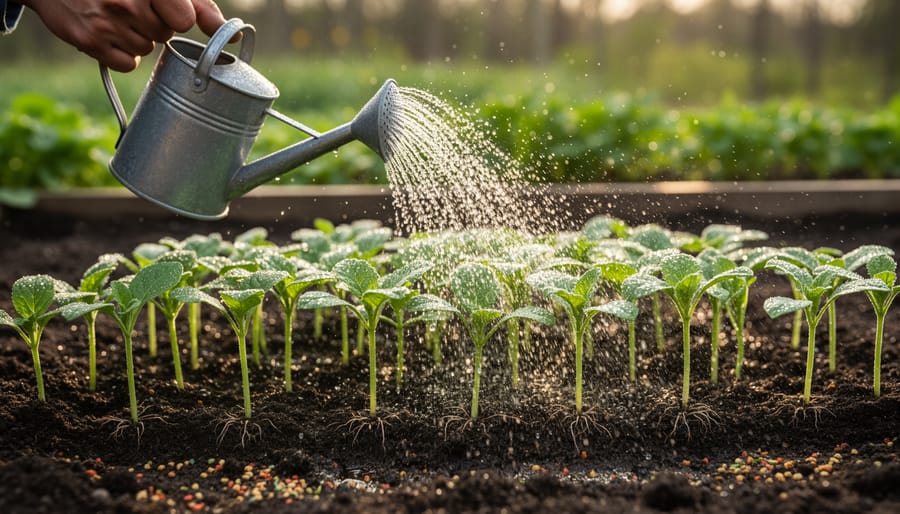
Liquid fertilizers dissolve in water and deliver nutrients directly to plant roots or leaves. You apply them every one to two weeks during the growing season, making them ideal for container plants, seedlings, or when you need to correct a nutrient deficiency quickly. The downside? They require more frequent attention and can wash away with heavy rain or overwatering.
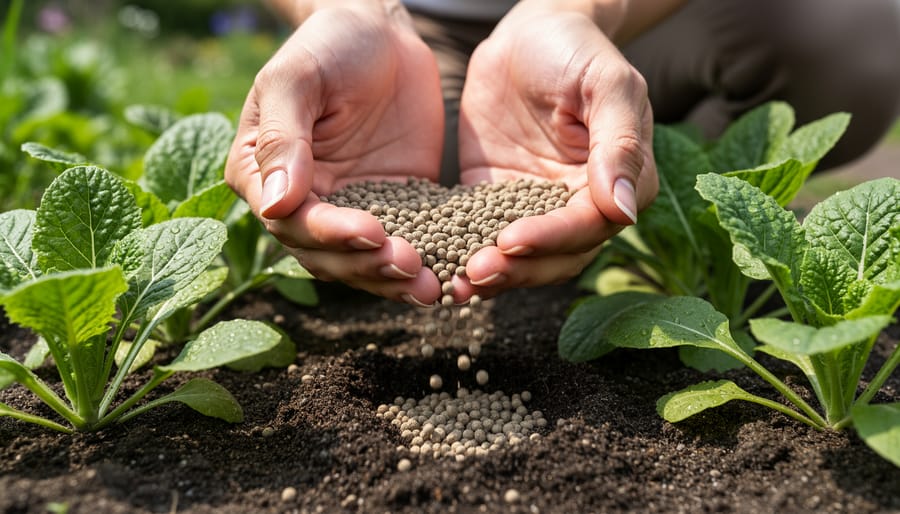
Granular fertilizers come as dry pellets or powder you sprinkle around plant bases. They break down gradually as you water, feeding plants for several weeks to months. This “set and forget” approach works beautifully for established garden beds, shrubs, and trees. Just scratch the granules into the soil surface and let nature do the rest.
Slow-release formulas, whether coated granules or organic materials like compost, feed plants steadily over an extended period, sometimes an entire growing season. These reduce the risk of burning plants with too much fertilizer at once and support consistent growth without constant reapplication. They’re perfect for mixed borders where you want lush, sustained color without weekly maintenance, letting you focus on the artistic arrangement rather than feeding schedules.
When and How to Fertilize Your Plants
Timing matters as much as the fertilizer itself. Plants have changing nutrient needs throughout their life cycle, and feeding them at the right moment means stronger growth, more blooms, and less waste.
- Early spring: Feed as plants break dormancy to support new leaf and stem growth
- Mid-season: Apply during active flowering or fruiting to sustain energy-intensive production
- Post-harvest for perennials: A light autumn feeding helps roots establish before winter
- Watch for pale leaves, stunted growth, or poor flowering as signs your plants need nutrients
For spring fertilizing wait until the soil warms and plants show active growth rather than feeding dormant roots. Heavy feeders like tomatoes and roses benefit from regular applications every four to six weeks during their growing season, while native perennials and established shrubs often need only an annual boost.
Application technique depends on your fertilizer type. Scatter granular formulas evenly around the plant’s drip line (where rain falls from the outermost leaves), then water thoroughly to activate them. Liquid fertilizers work faster when applied to moist soil, either poured at the base or misted onto leaves for foliar feeding. Always follow label rates, more isn’t better, and over-fertilization burns roots, encourages weak growth, and leaches excess nutrients into groundwater.
Read your plants between scheduled feedings. If they’re thriving with deep green leaves and steady growth, hold off. If new leaves emerge pale or growth slows unexpectedly, a light feeding might help. Fertilization should support your plants’ natural rhythm, not force them into constant production.
Common Plant Fertilization Methods in Action
Knowing the definition of fertilization is one thing, but seeing how different methods work in real gardens helps you choose the right approach for your plants. Each application technique delivers nutrients differently, and matching the method to your garden’s needs can transform both plant health and visual impact.
Top-dressing means spreading fertilizer on the soil surface around plants. This works beautifully for established perennials and garden beds where you want slow, steady nutrient release. Rain and watering gradually wash nutrients down to the roots. It’s ideal for ornamental borders where you’re shaping plants into living sculptures over the growing season.
Side-dressing delivers nutrients alongside growing plants, typically in rows or bands near the stem. Vegetable gardeners use this technique mid-season when plants like tomatoes and squash need extra fuel for fruiting. You scratch granular fertilizer into the soil a few inches from the stem, giving roots quick access without disturbing the plant.
Foliar feeding applies liquid fertilizer directly to leaves, where plants absorb nutrients through their stomata. This method works fast, making it perfect for correcting deficiencies or giving stressed plants a quick boost. It’s particularly useful for container gardens and fertilizing pots where you want precise control over nutrient delivery to create lush, artistic displays.
Fertigation combines fertilization with irrigation, dissolving nutrients in water delivered through drip systems or soaker hoses. This method excels in larger landscapes and container arrangements where you’re managing many plants with varying needs. The steady, controlled feeding supports consistent growth and helps you maintain the precise shapes and proportions that turn functional gardens into outdoor art.
Each method has its moment. Choose based on your plants’ stage, your garden’s design, and how hands-on you want to be with feeding.
Frequently Asked Questions About Plant Fertilization
Gardeners at every level run into fertilization questions. These answers cut through the confusion and help you nourish your plants with confidence.
Can you over-fertilize plants?
Yes, and it’s surprisingly easy to do. Too much fertilizer burns roots, causes leaf scorch, and can kill plants outright. Always follow package instructions and lean toward less rather than more.
Do all plants need fertilizer?
Not necessarily. Many native plants and established perennials thrive in average soil without supplemental feeding. Container plants and heavy feeders like tomatoes and roses benefit most from regular fertilization.
What’s the difference between plant food and fertilizer?
They’re the same thing from a gardening standpoint. Plants make their own food through photosynthesis, but “plant food” is the marketing term commonly used for fertilizer products that supply nutrients.
How do you know if your plants are underfed?
Look for pale or yellowing leaves, stunted growth, weak stems, poor flowering, or leaves dropping prematurely. These symptoms can also signal other problems, so check soil moisture and light conditions before reaching for fertilizer.
Remember that fertilization is just one piece of plant health. Water, sunlight, proper spacing, and good soil structure work together to create the conditions your garden needs. When you notice your plants struggling, take a moment to observe the whole picture before deciding whether fertilizer is the answer. Sometimes the best thing you can do is step back and let your plants tell you what they need through their growth patterns and appearance.
Understanding what plant fertilization truly means, providing essential nutrients that help your plants grow, flower, and thrive, gives you the foundation to make confident choices in your garden. Whether you reach for organic compost, a balanced synthetic blend, or a specialized foliar spray, you’re participating in the age-old practice of nourishing life from the ground up.
The beauty of fertilization is that there’s no single right answer. Your soil, your plants, and your artistic vision are unique. Try different methods, observe how your garden responds, and adjust as you learn what works best in your space. Some gardeners swear by slow-release granules, while others love the immediacy of liquid feeds. Your experience will guide you.
We’d love to hear what’s worked in your garden. Have you discovered a fertilization technique that transformed a struggling bed into a showstopper? Do you have questions about feeding a particular plant? Share your stories, tips, and challenges in the GardenSculpt community forum. Gardening is always more rewarding when we learn together.
Remember, every time you fertilize, you’re not just feeding plants, you’re collaborating with nature to create something beautiful, nurturing growth one handful of nutrients at a time.