
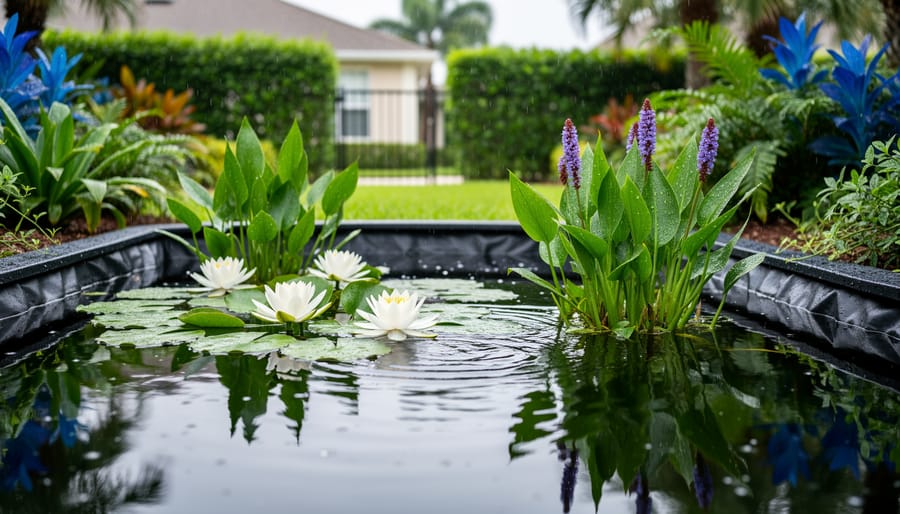
You can build a Florida water garden in a single weekend with a shovel, a pond liner, a few hardy aquatic plants, and a spot that gets about six hours of sun. Dig a shallow basin, level it, line it, fill it, and plant it. That’s the core of it. What makes a Florida version different is the climate: heavy summer downpours, fast evaporation, and warm water that grows algae in a hurry.
That’s where planning pays off. A well-placed water garden sheds extra rain gracefully, loses less water to the sun, and stays clear instead of turning green by July. Good smart water management is the quiet secret behind every sparkling pond you’ve admired on a garden tour.
Think of your water garden as living sculpture. Floating lilies, upright pickerelweed, and a ripple of reflected sky all become part of your landscape’s story. In the sections ahead, we’ll walk through the tools and materials you’ll need, a few simple safety steps, an ordered build you can follow at your own pace, and easy ways to check that everything is working. Once yours is up and running, we’d love to see it, so share your photos and swap plant tips with fellow GardenSculpt gardeners.
Why Florida Water Gardens Are a Smart Part of Water Management in Gardens
Florida’s weather swings between soaking summer storms and dry, scorching stretches, and a water garden can help you handle both. Think of it as a living reservoir that catches rain, holds it for a while, and gives it back to the landscape slowly.
Let’s define a few terms. Runoff is the rain that flows across your yard instead of soaking in, often carrying soil and fertilizer with it. A rain garden is a shallow planted dip that collects that flow and lets it seep into the ground. A microclimate is the small pocket of weather around a spot in your yard, which can run noticeably cooler and more humid near water and leafy plants. A pond or container pool can work alongside a rain garden to slow local runoff and give heavy downpours somewhere gentle to go.
Beyond the practical side, water brings the garden to life. Dragonflies, frogs, and songbirds show up quickly, and the plants add texture and color that no stone sculpture can match. It’s living art you get to shape.
The best part is that scale doesn’t matter. A glazed patio tub with a single water lily counts, and so does a sprawling backyard pond. Start with the space you have and let the garden grow from there.
Choosing Your Florida Water Garden Style and Spot
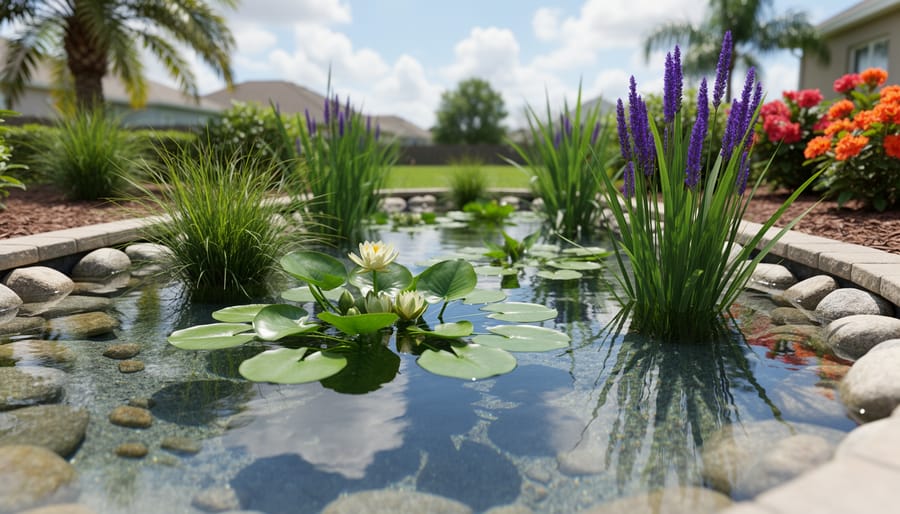
Container Pools, Preformed Ponds, or Natural-Style Ponds
Florida’s sandy soil, high water table in some regions, and sudden downpours shape which style will work best, so here’s how the three main options compare.
Container pools are the easiest entry point. A waterproof tub or a large pot with the drainage hole sealed gives you a pond in an afternoon, with no digging at all. That matters in areas where the water table sits close to the surface, since there’s nothing below ground to flood or float. Browse some creative gardening pots for sculptural shapes that double as garden art. The tradeoff is size: small volumes heat up fast in summer and can overflow in a storm, so place them where they’ll get afternoon shade.
Preformed ponds are rigid plastic or fiberglass basins you set into a hole. They suit beginners and mid-range budgets, and the built-in plant shelves take the guesswork out of depth. Sandy soil makes digging easy, but it also shifts, so compact the base and level carefully. In high-water-table areas, a basin can “float” when groundwater rises, so keep it filled and consider a raised or partly raised install.
Natural-style ponds use a flexible liner and offer the most creative freedom, along with the best capacity to absorb heavy rain. They take more skill and time, and you’ll need to plan a gentle overflow path so storms don’t wash soil and debris into the water. For a first project, a container or preformed pond is a friendly place to start, and you can always expand later.
Picking a Site That Works With Sun, Shade, and Drainage
Where you put your pond matters almost as much as how you build it. In Florida, the sweet spot is a place that gets roughly four to six hours of direct sun. That’s enough light to keep water lilies and other flowering plants blooming, but not so much that the water turns into a warm, green soup. If you can, aim for morning sun and afternoon shade. Gentler morning light feeds your plants, while shade from the hottest part of the day slows evaporation and keeps algae in check.
Next, take a walk around your yard after a heavy rain. Notice where water collects and where it runs. Low spots are tempting because they feel naturally “watery,” but they’re also where runoff carries in fertilizer, soil, and grass clippings, which can cloud your pond or even flood it. A slightly higher, gently level area works better, and a nearby rain garden (a planted dip that soaks up extra stormwater) can catch the overflow.
Also steer clear of spots right under big trees. Falling leaves, flowers, and seed pods break down in the water and feed algae.
Before you dig, grab a pencil and sketch your yard. Mark the sun path, the wet spots, and your favorite views. Treat it like a design exercise, and have fun with it.
Tools, Materials, and Plants for Your Water Garden
Florida-Friendly Water Plants to Consider
Florida’s heat and humidity are tough on plants, but plenty of aquatic species are built for exactly these conditions. A few reliable starting points will give your pond color, texture, and structure from spring through fall.
Pickerelweed (Pontederia cordata) is a marginal plant, meaning it grows in shallow water along the pond’s edge. It sends up glossy, heart-shaped leaves and spikes of violet-blue flowers that pollinators love. Plant it on your shallow shelf, where the crown sits just under the surface.
Arrowhead (Sagittaria lancifolia) is another marginal native with bold, arrow-shaped leaves and small white blooms. It spreads steadily, so it fills in bare edges without much fuss.
Blue flag iris (Iris virginica) brings early-season drama. Its sword-like foliage adds vertical lines, and the flowers look like tiny works of art. It handles wet feet and warm days with ease.
Water lilies (Nymphaea) are the classic floating plant. Their pads shade the water, which helps cut algae and slow evaporation, a nice bonus for water management. Hardy and tropical types both do well here, though tropical varieties love the heat.
Before you shop, check with your local UF/IFAS Extension office. They can point you to species that suit your region, from the Panhandle to South Florida.
Just as important, steer clear of invasive aquatic plants like water hyacinth, water lettuce, and hydrilla. They escape into waterways, choke out native life, and cost the state millions to control. Many are regulated, so check local rules before you plant or buy.
Found a combination you love? Share your favorite plant pairings in the GardenSculpt forum, and let’s swap ideas!
Safety Notes Before You Dig and Fill
A little prep keeps the fun part fun. These few safety habits take minutes and save you from the kind of surprises that stall a project.
Once the utility flags go up, treat them as boundaries. If your shovel turns up a marker, cable, or pipe you didn’t expect, stop digging right away and call the utility company before going any further. The same goes for standing groundwater. Florida’s water table can sit close to the surface, especially after a big storm, and if the hole starts filling from below, pause and rethink the depth or location rather than fighting it.
For anything electrical, like a small pump or fountain, a GFCI outlet cuts power quickly if something goes wrong. Use outdoor-rated cords and keep connections up off the ground and away from the water’s edge.
If kids or pets visit your yard, plan for them from the start. A shallow shelf along the edge, a sturdy grate or cover, or a low decorative fence can all be designed to look intentional rather than clunky. Check your city or county rules too, since some areas have requirements on pond depth and fencing.
Finally, look after yourself. Wear sunscreen and a hat, dig in the cooler morning hours, and keep water close by. Florida heat sneaks up fast.
Step-by-Step: Building Your Water Garden From Dig to Planting
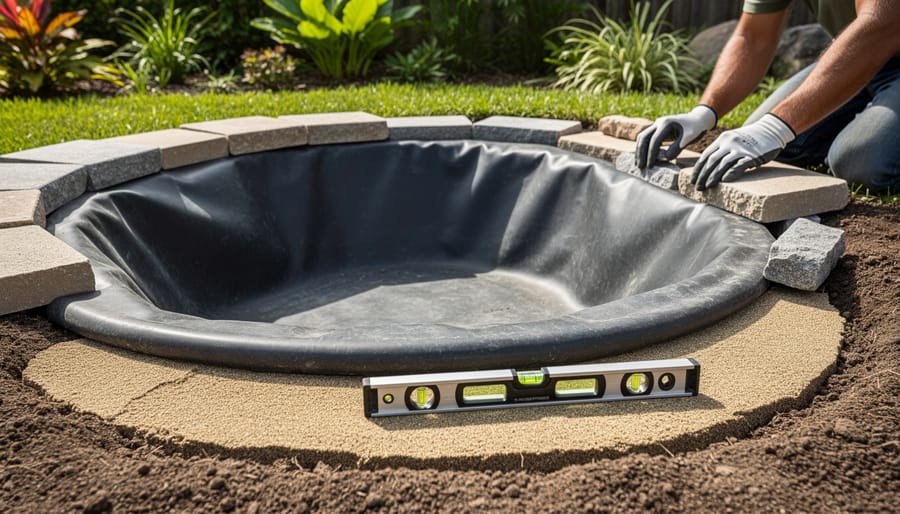
Ready to get your hands dirty? Here’s the build, start to finish. Take your time with the early steps, because a well-prepped hole saves you headaches once the water goes in.
- Mark the outline. Lay a garden hose or rope on the ground in a flowing shape, step back, and adjust until it feels right with the rest of your garden. Spray-paint the final line.
- Dig the deep zone first. Excavate the center about 18 to 24 inches down, which is plenty for lilies and fish in most Florida yards.
- Cut a planting shelf. Step the edge up about 8 to 10 inches below the water line, 10 to 12 inches wide, so marginal plants have a place to sit.
- Level and compact the base. Lay a straight board across the rim with a level on top, then tamp the bottom firmly. Florida’s sandy soil shifts easily, so a solid base matters.
- Add underlayment. Line the hole with pond underlayment or old carpet to protect against roots and sharp stones.
- Set the liner or basin. Drape the flexible liner loosely so it can stretch as water fills, or nestle a preformed basin in a sand bed and check that it’s level.
- Edge with stone. Tuck the liner edge under rocks, overlapping slightly so water can’t wick out over the lip.
- Fill and settle. Add water slowly, adjusting the liner as it fills. Let it sit a few days so chlorine dissipates and temperature stabilizes.
- Plant at the right depths. Place potted marginals like pickerelweed on the shelf, set water lilies in the deeper zone, and raise pots on bricks if they sit too low.
A quick tip on that sandy soil: when you’re digging, notice what comes out of the ground. If you’d like to understand more about how soil works it helps explain why Florida pond walls can crumble and why compacting matters so much. Keep any good topsoil you dig up, since it’s handy for planting beds around the pond.
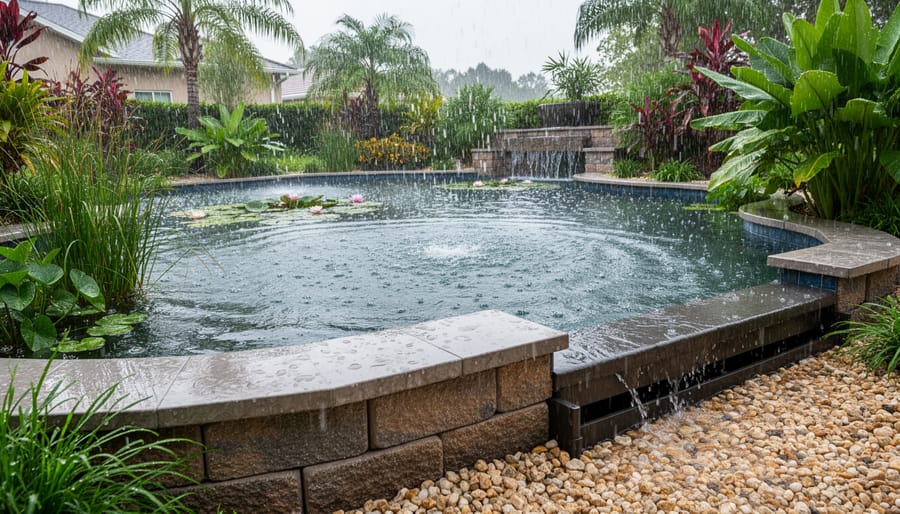
Now for the part that makes this a true water management feature: plan for summer downpours before they happen. Florida storms can dump an inch of rain in minutes, and a pond with nowhere for that extra water to go will overflow right where you don’t want it.
Build in a gentle spill area by making one section of the edge a few inches lower than the rest, then line it with river rock or gravel. Direct that low spot toward a shallow rain garden, which is simply a planted dip that soaks up runoff, filled with moisture-loving natives like blue flag iris or soft rush. The overflow slows down, filters through the plants, and sinks into the ground instead of racing across your lawn.
Think of the rain garden as a soft, leafy frame for your pond, one that works hard every time the sky opens up.
Keeping the Water Healthy: Everyday Water Management in Florida’s Climate
A healthy Florida water garden is mostly about balance, and a few steady habits keep it clear and calm even in July heat.
Start with plant coverage. Algae loves bright sun and nutrient-rich water, so aim to shade roughly half to two-thirds of the surface with lily pads, floating plants, and tall marginals. Think of it as painting with living leaves: the more intentional your plant layers, the less room algae has to bloom. If water turns green, resist the urge to drain everything. Pull a bit of excess growth, add plants, and give it a couple of weeks to settle.
Florida’s sun also pulls water out fast. During dry spells you may lose an inch or more a week, so top off regularly. Fill slowly, and if your water source is treated, use a dechlorinator or let it sit for a day first. To make it easier to set up smart water habits, consider a rain barrel nearby that doubles as your refill source.
Summer storms are the opposite challenge. Heavy downpours can overflow a pond and wash soil and debris into it. A gentle spill area, a gravel edge, or a surrounding rain garden (a shallow planted dip that soaks up runoff) gives extra water somewhere to go.
For mosquitoes, keep water moving. A small fountain or pump breaks up the still surface where larvae develop. Mosquito-eating fish, such as native mosquitofish, are a popular helper, though you should check local guidance before adding any fish.
When cooler snaps arrive, tropical plants may brown back. Trim damaged foliage, move sensitive plants to a sheltered spot, and keep up light seasonal care so everything bounces back in spring.
Checking Your Results and Planning Your Next Garden Project
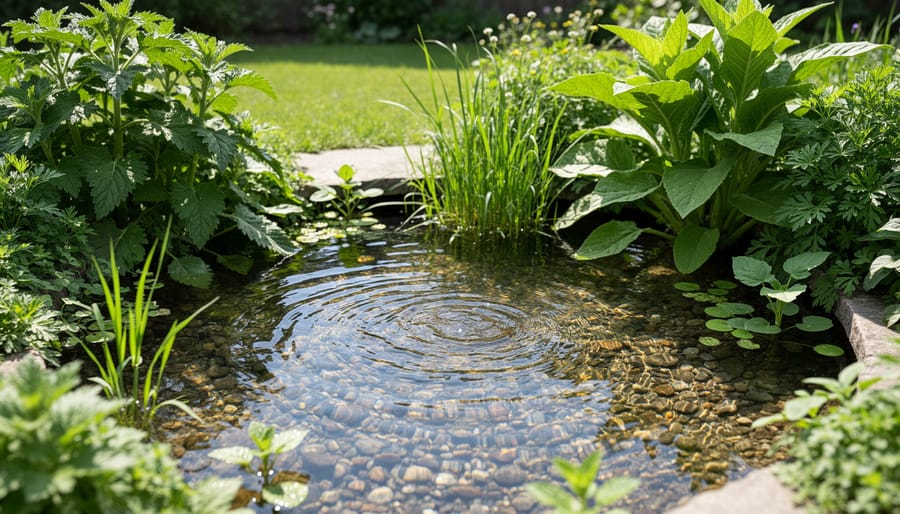
You’ll know your water garden is finding its balance when a few quiet signs show up. The water looks clear-ish rather than crystal (a little tint from plants and tannins is normal), your plants hold their shape instead of yellowing or collapsing, and wildlife starts dropping by. Dragonflies, frogs, and birds stopping for a drink are a great report card.
Expect some cloudiness or a green flush in the first few weeks. That’s the pond settling in, not a failure. During the first month, check the water level every few days, since Florida heat can pull down an inch quickly. Trim dead leaves, nudge plants to their proper depth, and add more floating or marginal plants if sun is hitting open water and feeding algae. If the water stays murky past a month, shade it a bit more or add plants to soak up extra nutrients.
How deep should a Florida water garden be?
Many backyard water gardens work well at 18 to 24 inches deep, with a shallow shelf of 6 to 10 inches for marginal plants. Check local rules, since some areas regulate depth.
How do I prevent mosquitoes?
Keep the water moving with a small pump or fountain, and consider mosquito-eating fish. Both make it hard for larvae to settle.
Do I need a pump?
Not always. A well-planted pond can stay healthy without one, but a small pump helps with circulation and mosquito control.
Which plants are safest to start with?
Native favorites like pickerelweed, arrowhead, and blue flag iris are forgiving and well suited to Florida conditions.
Once things settle, the fun part begins. Add a sculpture at the water’s edge, tuck in a bubbling fountain, or lay stepping stones so you can wander right up to the pond. Each touch turns a functional water feature into living garden art.
Snap a before photo now and an after photo once your plants fill in. We’d love to see them in the GardenSculpt community forum, where you can join our before-and-after challenge and swap ideas with fellow gardeners.
A Florida water garden is more than a pretty pond. It’s a living piece of garden art that also pulls its weight, slowing runoff, softening the heat around it, and giving rainwater somewhere useful to go. Get the spot, the plants, and the upkeep right, and the whole thing mostly looks after itself.
You don’t need a big backyard or a big budget to begin. A single container pool on the patio with a few pickerelweed and a floating lily will teach you plenty about how water, sun, and plants balance each other. Start small, watch what happens through a few hot, rainy months, and then let your creativity take over. Add a sculpture, a tiny fountain, or a ring of stepping stones.
Whatever you build, we’d love to see it. Pop into the GardenSculpt forum and share your photos, your plant combinations, and your questions. Your first ripple might inspire someone else’s whole garden.